Korean Bibimbap Bowl calories & nutrition
Korean Bibimbap Bowl contains 434 calories per serving (22% of a 2,000 kcal daily diet), with 12g fat, 53g carbs, and 27g protein. This nutrition data is based on real meals tracked by Arise app users.
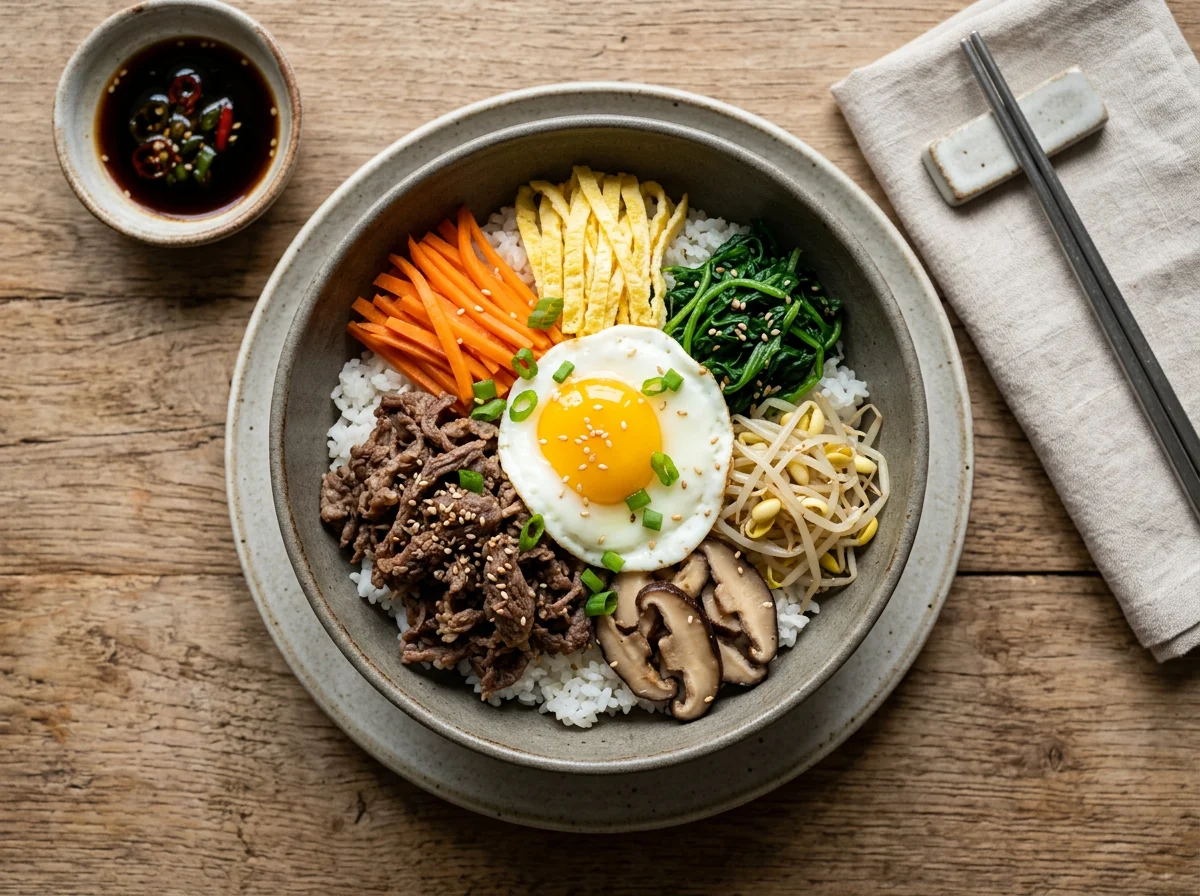
What's in Korean Bibimbap Bowl?
| Ingredient | Amount | kcal | Fat | Carb | Protein |
|---|---|---|---|---|---|
| White Rice | 150 g | 195 | 0.4 | 42.6 | 4.3 |
| Shredded Beef | 60 g | 150 | 8 | 2 | 17 |
| Carrots | 30 g | 12 | 0.1 | 2.8 | 0.3 |
| Egg Strips | 30 g | 47 | 3.3 | 0.3 | 3.8 |
| Soy Sauce Dressing | 30 ml | 30 | 0.5 | 5 | 1.5 |
Macronutrients (Fat, Carbs, Protein) are shown in grams (g).
Ingredient links
White Rice · Shredded Beef · Carrots · Egg Strips · Soy Sauce Dressing
How does Korean Bibimbap Bowl compare to similar dishes?
| Dish | Weight | kcal | Protein | vs. this dish |
|---|---|---|---|---|
| Budae Jjigae (Korean Army Stew) | 860g | 1152 | 42g | +718 kcal, more protein |
| Gimbap (Korean Seaweed Rice Rolls) | 502g | 757 | 35g | +323 kcal, more protein |
| Japchae (Korean Glass Noodles Stir-fry) | 260g | 300 | 8g | -134 kcal, less protein |
| Korean Army Stew (Budae Jjigae) with Side Dishes and Soju | 1310g | 1660 | 43g | +1226 kcal, more protein |
Frequently Asked Questions
Is Korean Bibimbap Bowl healthy?
Yes. With 27g of protein and only 53g of carbs, Korean Bibimbap Bowl is a nutritious meal. At 145 kcal/100 g, it has low energy density — filling without excessive calories.
Is Korean Bibimbap Bowl good for weight loss?
Yes. At 434 calories with 27g protein, Korean Bibimbap Bowl keeps you full while fitting most calorie budgets. High protein helps preserve muscle during weight loss.
How much protein is in Korean Bibimbap Bowl?
One serving contains 27g of protein, which is about 27% of the recommended daily protein intake.
What app can track calories in this meal?
Arise lets you track this meal instantly by taking a photo. No manual entry needed — the AI recognizes ingredients and calculates nutrition automatically.
What are the nutrition facts for Korean Bibimbap Bowl?
- Macro split: fat 26%, carbs 49%, protein 25%
- Energy density: 145 kcal/100 g (low)
- Top calorie contributors: White Rice, Shredded Beef, Egg Strips
How long does it take to burn off Korean Bibimbap Bowl?
- Jogging: ~50 min
- Cycling: ~57 min
- Walking: ~106 min
* Assumes a 70 kg person, moderate pace.
How much of your daily intake is Korean Bibimbap Bowl?
- kcal: 22% of daily intake
- Fat: 18% of daily intake
- Carb: 26% of daily intake
- Protein: 27% of daily intake
* Reference intake: 2000 kcal, fat 70 g, carbs 200 g, protein 100 g.
Track meals instantly with Arise
Just snap a photo — Arise uses AI to identify ingredients and calculate calories, protein, carbs, and fat in seconds.
- No barcode scanning
- No manual searching
- Works with any dish